A Place with Soul and Tradition
Drouseia is a village that breathes tradition. It is a living museum of Cypriot life, full of stories, customs, and deep religiosity. Its cultural identity is reflected in the stone houses, the cobbled alleys, the cafes that keep the pulse of the village alive, and the churches that stand like sentinels of time.
The visitor feels like travelling in time through the participation in local festivals, traditional festivals, religious processions and the hospitality of the locals, who continue to preserve the customs with respect and love.
Religious Monuments
Church of Saint Epiphanius
The church of Agios Epiphanios dominates the centre of Drouseia and is one of the most important spiritual and historical points of the village. It is dedicated to Saint Epiphanios, Bishop of Salaminos, one of the most important Fathers of Orthodoxy.
The building, simple and stone-built, follows the traditional Cypriot architecture with a tiled roof and arches, while the interior is distinguished by the carved wooden iconostasis and the icon of the Saint.
The church functions as an active centre of worship and is located at a central point of the community, surrounded by cafes, cultural spots and the heart of the social life of the village.


Monastery of Saint George of Nicoxylitis
About 3 km east of Drouseia, in a green landscape, is the historic Monastery of St. George of Nikoxilitis. Built in the 9th-10th centuries, it is said to have been erected on an older cult site, which reinforces its religious and archaeological importance.
Although the temple is now abandoned, it is still a reference point for pilgrims and scholars, while oral traditions about its foundation and rumoured miracles of the Saint are preserved around it. Its natural environment offers a unique experience of tranquillity and contemplation.


Cave of Agios Ablia (or Abelli)
At the boundaries of the community, on a steep slope, is the cave of Agios Ablia – known to the locals as “Abellis”. It is a natural cave with a strong religious character, which, according to local tradition, is linked to the presence or ascetic activity of Saint Ablia, one of the 70 Apostles.
The place was formerly used as a place of contemplation and prayer, and it retains its mystical character to this day. The cave is surrounded by wild vegetation and offers tranquility and panoramic views, making it a unique spot for those seeking spirituality in nature.
Holy Chapel of Apostle Luke
The chapel of Apostle Luke is located on an elevated point east of Drouseia and offers a panoramic view of the countryside and the bay of Polis Chrysochous. It is a simple, stone-built chapel, typical of the Cypriot countryside, dedicated to the Evangelist and Physician Apostle Luke.
The area is a prayer point and a stop for walkers who follow the natural routes of the area. The tranquil location and the unique atmosphere make the chapel a favourite destination for those seeking silence, contemplation and connection with the landscape.


Cultural Activities
Drouseia keeps its cultural identity alive through events that combine tradition, music and community:
Local Festivals & Events
Throughout the year, traditional festivals and cultural events are organized in the village square or school and in religious places, attracting residents and visitors.


Traditional Music & Dance
Folklore groups and local musicians accompany each event, with traditional songs, dances and choral groups that revive local customs and stories.

Handicrafts & Arts of Tradition
The women of the village keep up with passion arts such as weaving, and the production of dairy products that are exhibited at events or offered to visitors.


Cultural Heritage
Drouseia preserves its cultural identity with respect and consistency:
Traditional Architecture
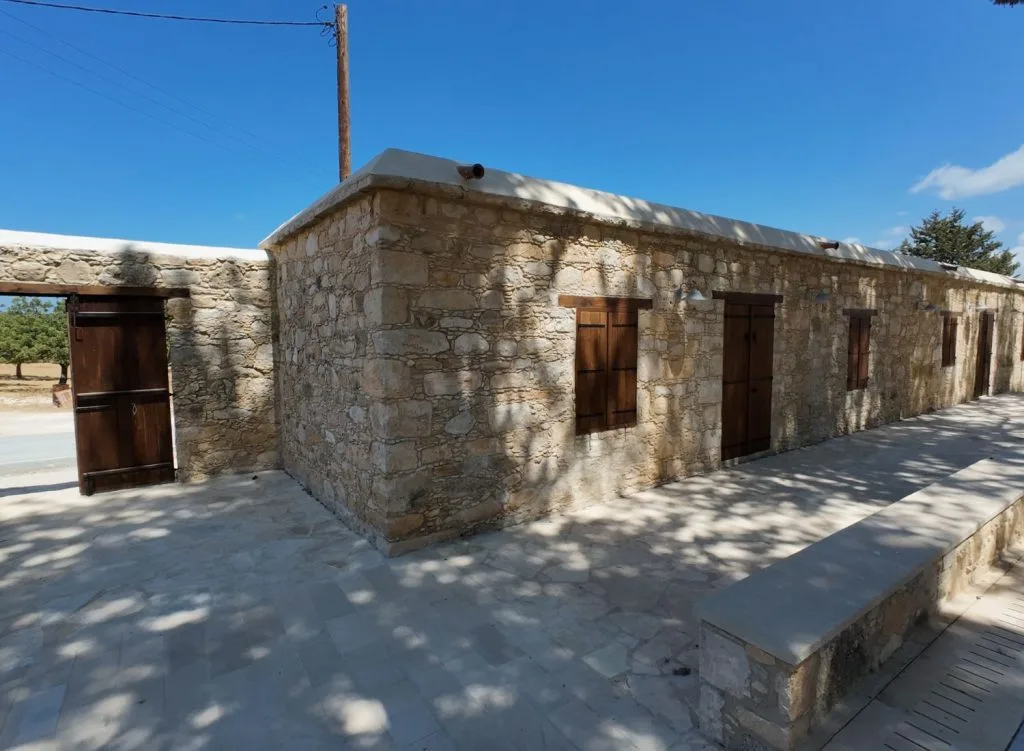
Stone houses, arches, courtyards and cobbled alleys make up the authentic character of the village, reminiscent of images of another era.


Cyprus Local Gastronomy
Haloumi, honey, olive oil, rusks and wine from local producers give a taste of authentic Cypriot hospitality. The gastronomy of Drouseia is closely tied to the land and traditions.


Heritage in Motion
Cultural memory is actively transmitted – through stories, customs and collective experiences. Residents pass on stories and traditions that live on through younger generations.


